The Evolution of Education
The Past, Present, and Future of Professional Haircolor Learning
The beauty industry is made up of some of the most creative, passionate, and diverse individuals in any profession. We come from different backgrounds, embrace different techniques, and often hold very different philosophies about our craft. But there's one thing nearly every haircolorist can agree on: education is one of the greatest investments we can make in ourselves and in our profession.
Access to that education has changed dramatically. The methods, the messengers, and the opportunities to learn have all evolved, and that evolution has reshaped how professional knowledge is shared with today's haircolorist.
At the Board of Certified Haircolorists, we don't advocate for a single pathway to education; every experience contributes to the professional we become. It's the "why" behind formulation, problem-solving, and color correction that separates real education from information, and it's worth understanding how we got here.
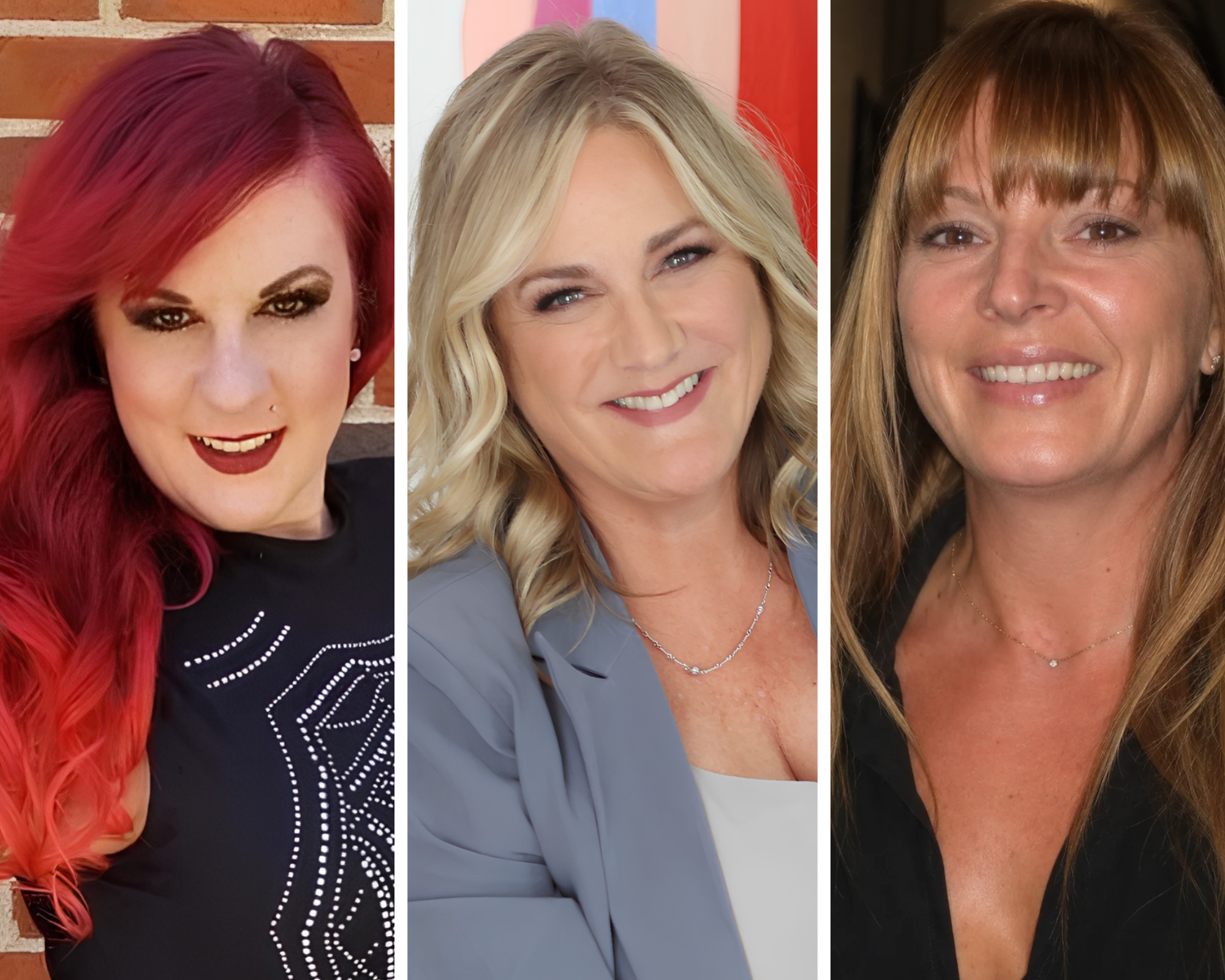
To explore that evolution, we spoke with three respected haircolorists whose careers followed very different paths. Tookie Carlson started as an educator less than two years out of cosmetology school and spent 24 years shaping professional education from within the manufacturer world. Elyse Rox, who has done hair for 35 years, has built a reputation as one of the industry's most recognized independent digital educators. Elaine Travis spent 40 years behind the chair before authoring a book in 2016, which became the start of an independent education platform centered on mentorship and long-term learning. Together, their stories trace how haircolor education has moved from manufacturer-led training to independent and digital learning, and what's been gained, and lost, along the way.
Learning Before the Algorithm
Over a 24-year career in the manufacturer world, Tookie Carlson experienced manufacturer education from nearly every angle — as a stylist, salon owner, and eventually a leader across curriculum development, corporate training, and educational strategy. Her early career put her directly in the room with a generation of educators who helped build the brands they represented. She remembers the industry's appetite for education looking very different than it does today. In the late '80s and '90s, product innovation was moving so fast that stylists were willing to pay for full-day events, not just trade shows. She gave examples like the Aveda Symposium in Minneapolis and Matrix's touring circuit that passed through major U.S. cities. She describes that time as an "all-encompassing 360 circle": professionals caravanning across the country to see everything from product training to hair color shows that were built to wow a room.
That appetite shifted as booth rental became more common through the 2000s and 2010s, and live events grew harder for manufacturers to justify because they weren't getting a trackable return. "Education's very expensive," Tookie said. "You spend money with no trackable return, and where do budgets get cut? The education department." State licensing rules added another complicated layer for the manufacturer: classes that could be counted toward continuing-education hours couldn't be a product pitch. They could describe an alkaline demi-permanent color versus an acidic color, but, as Tookie put it, they couldn't say "this brand does this versus that brand does that." Manufacturers learned to teach around it, building curriculum on categories and chemistry rather than product names.
Through all of her years as the Educational Director for a brand manufacturer, Tookie says her goal was always the same: to build knowledgeable professionals by combining technical expertise with creative inspiration. "Everything has to be all-encompassing," she explained. Every manufacturer has a responsibility to teach not just what its products do, but why they work.
The Rise of the Independent Educator
For decades, the industry's most respected educators — names like Tom Dispenza, Beth Minardi, Sonya and Christopher Dove — were synonymous with the manufacturers they represented. Their credibility came from technical expertise, years behind the chair, and working side by side in the lab with the chemists who created the brands they represented.
But as manufacturers increasingly asked their educators to promote products and support sales, the role started to feel less like teaching and more like selling. According to Tookie, many of those educators had never wanted to be salespeople in the first place. As social media grew, it created space for something new: the independent educator, free to teach from a broader perspective centered on craft rather than brand.
For some, going independent wasn't just about creative freedom. It was about pay. Elyse remembers manufacturer classes that paid barely enough to cover the drive: "I'd get paid $115. I can make $115 behind the chair in less than an hour."
Then came COVID-19, which moved nearly all education online almost overnight. Elaine, recognizing opportunity, chose this moment to build an independent platform to close the gap between cosmetology school and real salon work. Elyse, encouraged by those around her, moved to digital platforms to reach more professionals while teaching beyond a single brand. Where manufacturers once shaped most of what the industry learned, independent educators could now respond directly to the needs of the salon professional, making education more accessible and more responsive than ever.
Access Without Accountability
That accessibility has created a paradox: the same platforms that opened education up have also made it harder to tell expertise from influence. Experienced educators now share space with creators who have far less technical knowledge, and the traditional signals of who is qualified to teach have largely disappeared.
Tookie sees manufacturer education's accountability as its real advantage when competing with independent educators for education sales. "There's someone holding that educator accountable for what they're saying," she said, describing the teams of chemists and education directors who vet the content. But that accountability isn't neutral. "From a manufacturer's standpoint, education is an investment in marketing, it's an investment in sales, and it's an investment in long-term customer loyalty and customer support," she said.
The accountability manufacturers provide comes at a tradeoff. Historically, manufacturers have been the gatekeepers of professional knowledge — their role has been to educate professionals on their own products, systems, and philosophies, but not necessarily to provide a complete understanding of haircolor beyond the boundaries of their brand. "Teach us. Stop trying to sell us your product," Elyse said. Independent educators challenged that model by teaching across brands, comparing technologies, and discussing techniques without being limited to a single product portfolio. In doing so, they broke down one form of gatekeeping by making professional knowledge more widely accessible. That doesn't mean gatekeeping doesn't exist within the community of independent educators, though. It is arguably one of the biggest issues haircolorists have with education in our industry. Elyse doesn't hesitate to speak about it. "It's kind of been an issue... the gatekeeping in our industry," she said. "And I'm tired of it."
Let's clarify what gatekeeping actually is… and what it isn't. Charging someone for technical expertise that a brand or an independent educator has spent years mastering is not gatekeeping. Gatekeeping occurs when someone charges in a way that intentionally withholds essential knowledge or creates dependency, rather than genuinely educating. Some independent educators have built their platforms on transparency and a genuine desire to help others grow — but others have created their own forms of exclusivity, promoting "secret" techniques or building businesses that rely on keeping learners dependent rather than empowering them to think critically for themselves. The way to recognize it: ask yourself whether the educator genuinely wants you to become more knowledgeable, or whether they're intentionally keeping you dependent on them.
Elyse gives away most of her education for free, but admits that it comes with its own uncertainty. When asked how she makes that work as a business, she said: "I'm hoping I'm going to get more and more brand deals. I'm hoping people start to appreciate what I'm doing." She intentionally opted out of TikTok's Creator Rewards Program, worried monetization would make her audience question her motives. "I don't like being salesy," she explained. "Everything here is free. I'm literally saving you hundreds of dollars in education."
Elaine Travis has built a business model based on both paid and free education, and what she found is: "When people pay, they pay attention." The numbers back her up. 1,500 people once signed up for one of her free webinars, and roughly 98 showed up. As another example, she built a free mentorship library with contributions from some of the industry's most respected names and drew close to 2,000 signups — fewer than 10% ever opened the content.
Charging is legitimate. So is giving something away for free. What earns an audience, in either model, is credibility. The educators worth following aren't the ones who promise secrets — they're the ones who teach you how to think. But even the best education has little value if the learner isn't willing to engage with it. Finding education isn't the challenge. Recognizing what's credible — and choosing to engage with it — is.
The Responsibility of the Learner
So how do we know who to trust?
The responsibility no longer rests solely with educators to provide accurate information. It also belongs to learners to evaluate what they're seeing, seek context, and verify it before applying it behind the chair.
Elyse Rox believes the first step is choosing your educators carefully.
"I just think people really need to be very selective about what they're hearing from people," she said. "Pick and choose who you listen to. Just because they've got a big number on their account just means they're good at Instagram. It doesn't mean they're good at education."
Popularity, she argues, isn't a credential. During our conversation, Elyse recalled seeing a well-known educator confidently claim that Olaplex contains protein. It doesn't. The platform was impressive. The information was wrong. Confidence and credibility are not the same thing.
Elaine Travis believes the next responsibility is seeking context.
"It's kind of like reading the middle of a book," she explained. "You don't know what the context is, and you don't know how it ends."
A one-minute video may show a technique, but it rarely explains the consultation, formulation, chemistry, or decision-making behind it. Without that context, even technically accurate information can be misunderstood. Social media can spark curiosity, but it should never replace comprehensive education.
Tookie Carlson offers the final piece of the puzzle: verify before you trust.
"If something doesn't feel right," she advised, "verify it."
Whether that means consulting a manufacturer, reviewing technical resources, or asking another trusted educator, Tookie encourages professionals to resist accepting every demonstration they see online as fact.
Together, Elyse, Elaine, and Tookie offer a simple framework for today's learner: Choose your educators carefully. Seek context. Verify what you learn. Information has never been easier to find. The responsibility lies in learning how to think critically.
Looking Ahead
The evolution of haircolor education is far from over. New technologies will emerge. New platforms will reshape how information is shared. New educators will continue to influence the next generation of professionals.
But while the way we learn will continue to evolve, the principles of great education will not.
Great educators teach with integrity. Great learners ask questions, seek context, verify information, and stay committed to growing.
That commitment is exactly why organizations like the Board of Certified Haircolorists continue to matter. In an era where information is abundant and anyone can claim expertise, professional standards, peer-reviewed resources, measurable competencies, and certification provide something increasingly rare: credibility.
Ultimately, the future of our profession won't be defined by algorithms, platforms, or the latest educational trend. It will be defined by professionals who never stop learning, never stop questioning, and never stop striving to better serve the clients who trust them.
Ig : elyserox00_
TikTok : elyserox00
YouTube: elyserox